hd_top1
Brand
arr_bottom_white
hd_top2
arr_bottom_white

Description

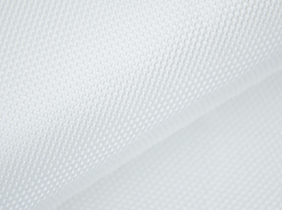
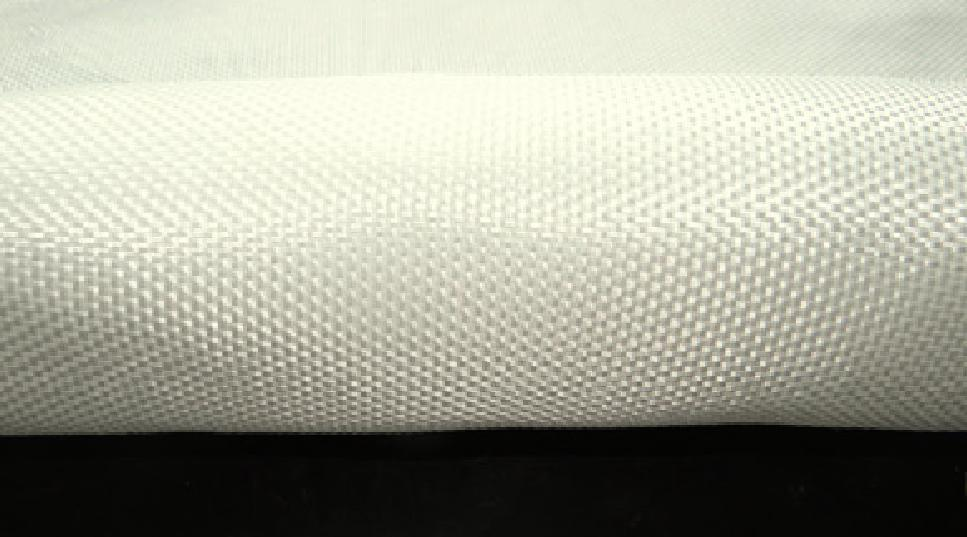
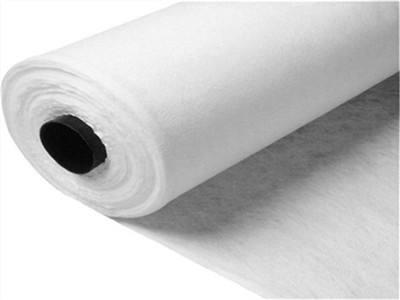
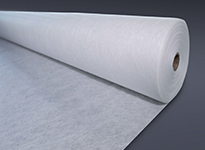
Polyester filament needled geotextiles is a non-woven fabric made of needle-punched reinforced polvester filaments. It does not require heat treatment and does not contain any chemical additives. it is an environmentally friendly building material. YH Polyester filament needled geotextiles are made of 100% virgin polyester with excellent aging resistance,excellent mechanical properties, excellent anti-aging, corrosion resistance and excellent water permeability; It can adapt to the uneven surface, the construction method is safer, simpler and more efficient,and it can solve the construction more economically and more durable.

Specifications

Characteristics and Packaging  


Item

Description 

Packaging

Roll 

Width (m)

2~5.2

Length (m)

50~100

Mass per unit area(g/m2)

140~950

Roll Size (m2/roll)

150~300

Properties


Properties

Unit

Inspection
Standards

Product Specification

35

50

65

80

100

120

140

160

180

200

250

Tensile Strength(MD)

kN/m

IOS 10319

35

50

65

80

100

120

140

160

180

200

250

Tensile Strength(CMD)

kN/m

IOS 10319

24.5

35

45.5

56

70

84

98

112

126

140

175

Elongation at Tensile Strength*

%

IOS 10319

30

Width Deviation Rate

%


-1

CBR Burst strength

kN

IOS 12236

2

4

6

8

10.5

13

15.5

18

20.5

23

28

Apparent Opening Size 090

mm

IOS 12956

0.05~0.50

Tear Strength

kN/m

ISO 9073-4

0.4

0.7

1

1.2

1.4

1.6

1.8

1.9

2.1

2.3

2.7

Mass Per Unit Area

g/m2

ISO 9864

140

200

260

320

390

460

530

600

680

760

950

Note: MD=Machine Direction/CMD= Cross Machine Direction

*The values given here are maximum values.

All values are based on test results determined under laboratory conditions and with product samples taken from original stock.

The above is only part of the data. For requirements of other models, you can communicate with our technical personnel about the feasibility for customized production.

Application Instructions

【Construction Technology】
Base inspection→On-site measurement and lofting→Laying-Lap treatment→Inspection and acceptance
【Construction key points】
Installation Requirements:

· Base inspection: Check whether the base layer is flat, firm, and free of large vegetation, protruding branches, sharp rocks, voids, or other objects that may damage the woven geotextile during installation.

· Trial Placement: Determine the geotextile dimensions based on site conditions, cut accordingly, and conduct a trial placement. The cutting dimensions must be accurate.

· Check whether the overlap width is appropriate. The overlapping areas should be flat and moderately tensioned.

· Geotextiles can only be cut with a geotextile knife (hook knife). If cutting is performed on-site, special measures must be taken for other materials to prevent damage caused by cutting the geotextile.

· During geotextile installation, the construction unit must take necessary measures to prevent damage to the underlying layer of material.

· Geotextile seams must be double-stitched. The stitching thread must be made of the same material as or superior to the woven geotextile and must be chemically resistant and UV-proof. The stitching thread should contrast distinctly with the geotextile for easy inspection. When stitching overlapping sections, the thread should be straight, and stitches should be evenly spaced. During stitching, special care must be taken to ensure no soil or gravel from the overlying layer enters the middle of the geotextile. After stitching, inspect whether the geotextile is laid flat and free of defects.

· After installation, visually inspect all geotextile surfaces to identify and mark any damaged areas for repair, ensuring no foreign substances that could cause damage remain on the installation surface.

· At stitched joints, re-stitching must be performed for repair, ensuring the ends of any skipped stitches are re-stitched.

Advantages

· High strength: Raw materials have high original strength. After weaving, a regular interlaced structure is formed, and the comprehensive carrying capacity is further improved.
· Durability: Not easy to change, decompose and weather. Can maintain its original characteristics for a long time.
· Corrosion resistance: Synthetic chemical fiber is generally resistant to acid, alkali, insects and mold.
· Water permeability: woven fabric can effectively control its structural pores to achieve a certain water permeability.
· Convenient storage and transportation: Because it is light and can be packed according to certain requirements, it is convenient to transport, store and construct.
Scope of Application
Mainly used in railway subgrade construction, highway subgrade construction.embankment retaining, sand retention and soil erosion prevention, tunnel water proofing membrane use, urban green flower project use, underground garage water proofing waterproof material substrate, artificial lake, pool, anti-seepag.
FAQ
  • Q1: What is a geomembrane?
    A geomembrane is a synthetic membrane liner or barrier used to control fluid migration in a wide range of civil, environmental, and industrial applications.
  • Q2: Why should I choose a geosynthetic barrier instead of traditional clay liners?
    Geosynthetics offer superior impermeability, faster installation, reduced thickness requirements, and higher chemical resistance compared to traditional compacted clay liners.
  • Q3: How long does a geomembrane last?
    Depending on the material and environmental conditions, service life can range from 30 to over 100 years.
  • Q4: Is it safe for drinking water or sensitive environmental applications?
    Yes, certain geomembranes are certified safe for potable water use and meet environmental regulations like NSF or GRI-GM standards.
  • Q5: What factors should be considered when selecting a geomembrane?
    Key factors include chemical resistance, mechanical strength, UV resistance, site conditions, expected service life, and installation method.
  • Q6: How thick should the geomembrane be?
    Common thicknesses range from 0.5 mm to 3.0 mm, depending on application requirements and site-specific conditions.
  • Q7: Are there international standards or specifications for geomembranes?
    Yes, ASTM, ISO, and GRI (Geosynthetic Research Institute) standards provide guidelines for testing and performance.
Send Your Message To Us
* Product Name:
* E-mail:
* Contact Number:
Company Name:
* Details:
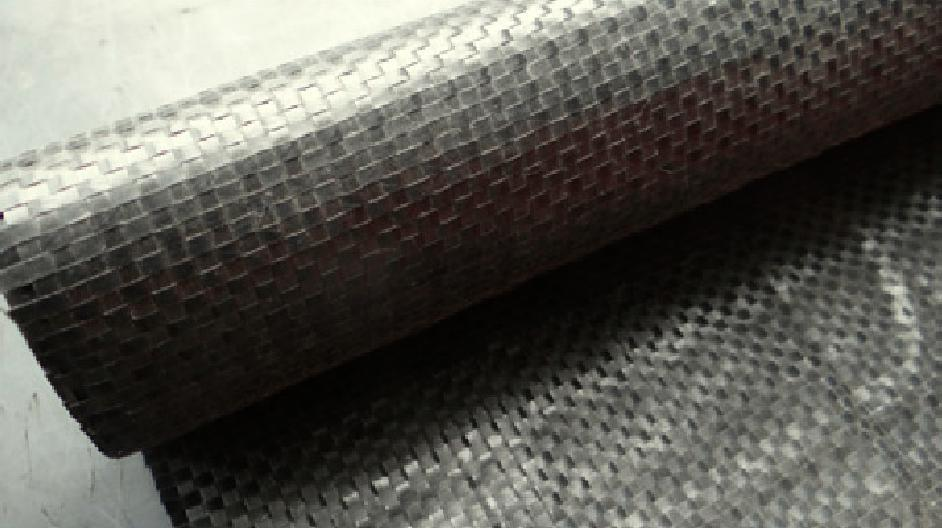
YH Filament woven geotextiles

Geosynthetics-synthetic filament wowen geotextiles

Ref Price:
Customisation:
Features & Benefits
  • High Puncture StrengthHigh Puncture Strength
  • Superior Creep ResistanceSuperior Creep Resistance
  • Outstanding UV ResistanceOutstanding UV Resistance
  • Easy and Reliable InstallationEasy and Reliable Installation
pdet_rf_icon6Follow US:
pdet_rf_icon7
Effective Logistical Security
pdet_rf_icon8
The Strictest Quality Assurance
pdet_rf_icon9
Online Customer Service
formpop_closeformpop_closeon
Get Latest Price
Help us more accurately and quickly offer you a quotation by telling us more!
* Product Name:
* E-mail:
* Quantity required:
*Contact Number:
Company Name:
* Details:
formpop_closeformpop_closeon
Available
Feel free to approach us for customised products, we will be in touch with you soon!
* Product Name:
* E-mail:
* Quantity required:
*Contact Number:
Company Name:
* Details:
formpop_closeformpop_closeon
We'd welcome your feedback!
How likely would you be to recommend OYHORDER.COM to a friend or colleague?
0 - Not likely at all
10 - Extremly likely
Please kindly tell us what could be done to improve your experience?
This field must not be empty
pop_close
pop_ico1
Are you sure to delete it?
pop_img3
pop_close
pop_ico2.svg
The shopping cart is empty and the order cannot be submitted
pop_img3.svg
Ok
pop_close
pop_ico3
Under development, please stay tuned
pop_img3
Ok