





Are you sure to delete it?











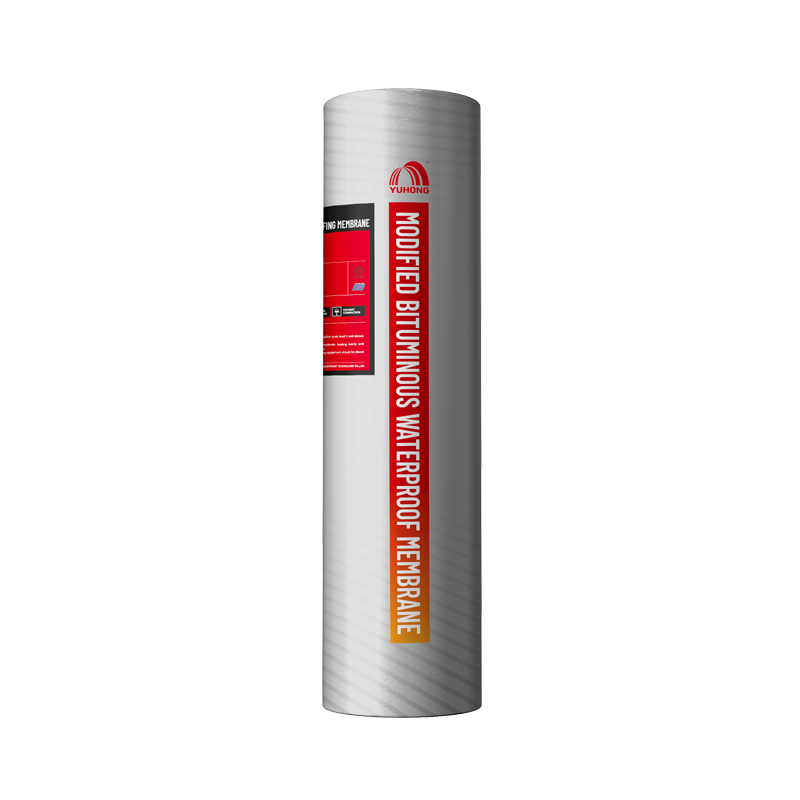

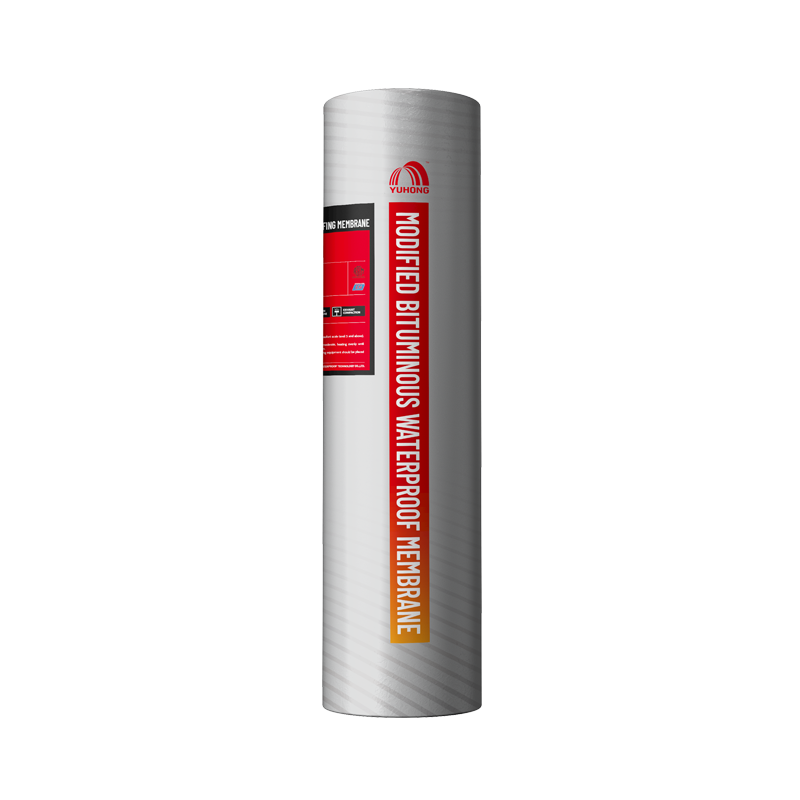
| Item | Description |
|---|---|
| Packaging | Roll |
|
Width (m) |
1 |
|
Thickness (mm) |
3,4 |
|
Length (m) |
10 |
|
Roll Size (m2/roll) |
10 |
|
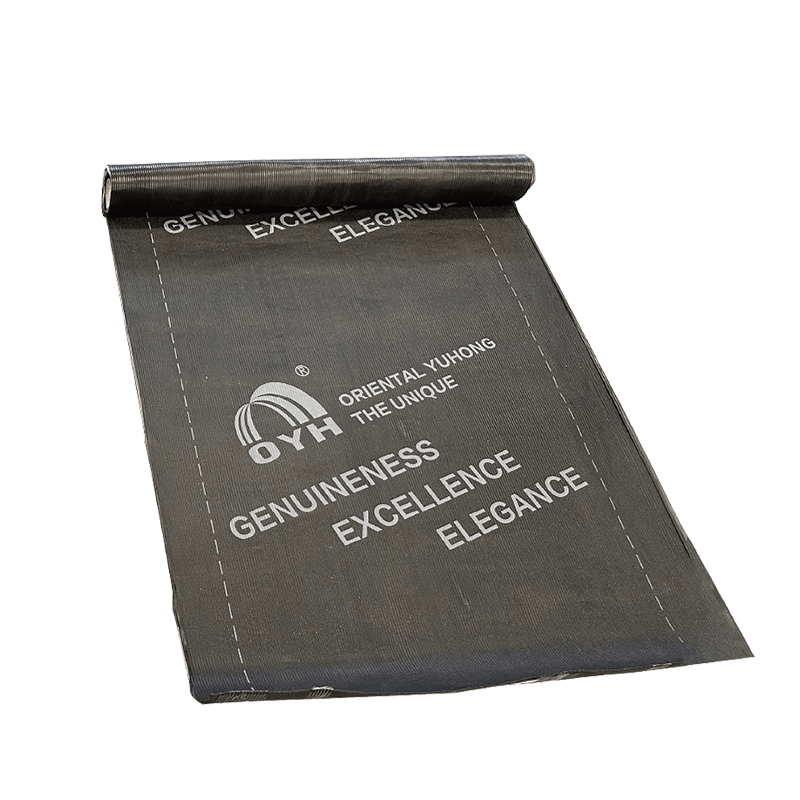
Upper Surface Material |
Polyethylene film (PE),Sand (S) and Mineral granules (M) |
|
Lower Surface Material |
Polyethylene film (PE) |
| Description | Test Methods | Values |
|---|---|---|
| Tensile Strength |
EN 12311-1 |
600±20%/500±20% |
|
Elongation at break (L/T)[%] |
EN 12311-1 |
30±15/35±15 |
|
Heat resistance @90℃ |
EN 1110 | Pass |
|
Low Temperature Flexibility (-10℃) |
EN 1109 | No Crack |
|
Watertightness (Method B: 24 hours at 60kPa) |
EN 1928 | Pass |
Application Instructions
Substrate preparation:
The concrete substrate should be clean, dry, sound, and free of all contamination, such as dirt, oil, and grease. Surface defects, such as blowholes and voids, must be repaired. Filling of joints and surface leveling must be carried out before application.
Priming:
Apply YHBituprimer-4035 (water-based bituminous primer) or an equivalent to a clean, smooth, and dry surface using a brush, roller, or spray. Allow it to dry before applying the membrane. The primer’s low viscosity of the primer enables it to penetrate concrete pores, enhancing membrane-substrate adhesion between the membrane and substrate. It also binds any remaining dust particles on the concrete surface. while binding residual surface dust particles.
Detailing:
Install strengthening layer at critical areas such as inside and outside corners, construction joints, pipe penetrations, eaves gutters, and expansion joints. Pre-cut the membrane to the required size and shape before application.
Membrane application:
Unroll the membrane to release stress and position it according to the layout lines. Use a torch to heat the underside of the membrane and the substrate surface. When the bitumen on the membrane becomes shiny and molten, roll out the membrane while continuing to heat. Then, use a roller to press firmly and remove trapped air, ensuring a secure bond with the substrate. CAUTION: Do not over-torch as this will expose the reinforcement in the membrane and damage the membrane.
Overlap treatment:
The overlap width of the membrane should be 100mm. Heat-seal the overlap area separately using the torch-applied method. At the seams between adjacent membranes, allow the modified bitumen to overflow slightly, with a uniform width of about 3-5mm.
Features & Benefits
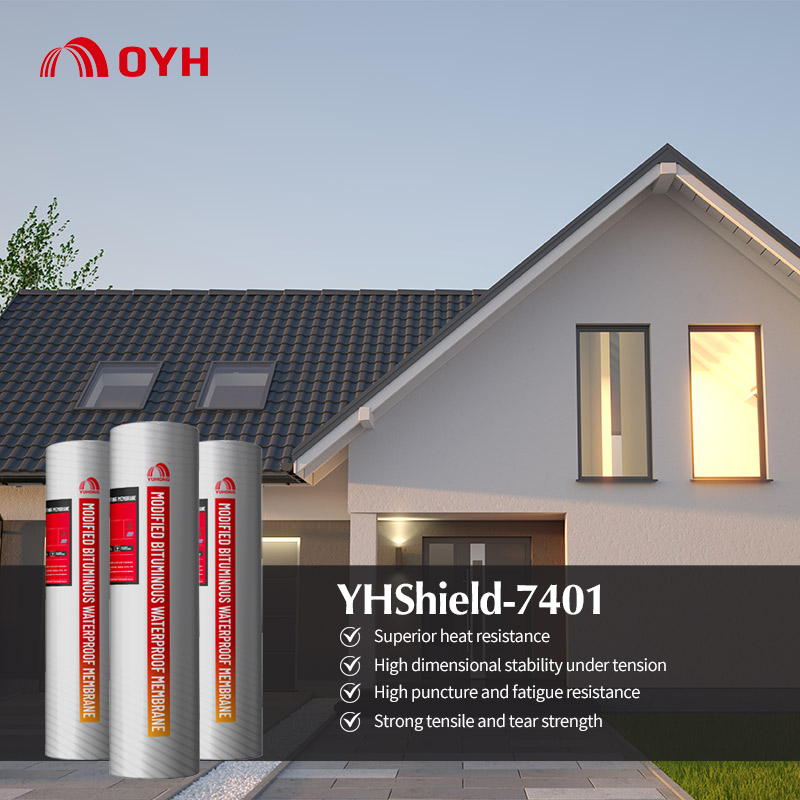
· High-quality modified compounds with select grades of refined asphalt contribute to durability, flexibility, and strength.
· Excellent resistance to hydrostatic water.
· High temperature stability and low temperature flexibility.
· Good resistance to mechanical impact.
· Elongation properties and flexibility help resist thermal and structural movement, even in cold temperatures, contributing to the longevity of your roofing system.
· Good dimensional stability.
 Excellent resistance to hydrostatic water
 High temperature stability and low temperature flexibility
 Good resistance to mechanical impact
 High-quality modified asphalt compounds for durability and strength
 Flexibility and elongation for long-lasting roofing performance